
A Field Guide to Jian Zhan Vessel Shapes
A Field Guide to Jian Zhan Vessel Shapes
Form follows function — and centuries of tea ceremony tradition. Each silhouette was refined over generations for a specific tea, a specific ritual, a specific moment. Learn to read the shape, and you learn to read the cup's purpose.

Constricted Rim束口盏
The most iconic Jian Zhan profile — the rim bends slightly inward before opening, creating a subtle waist just below the lip. This constriction acts as an aroma trap, directing the tea's fragrance toward the nose with every sip. Practical and purposeful: it also prevents the bamboo whisk from slipping out during the Song-era method of whisking powdered tea into a white froth. The Shukou is the original competition-tea shape, favored by Song dynasty tea masters and Emperor Huizong himself.
Explore Constricted Rim pieces →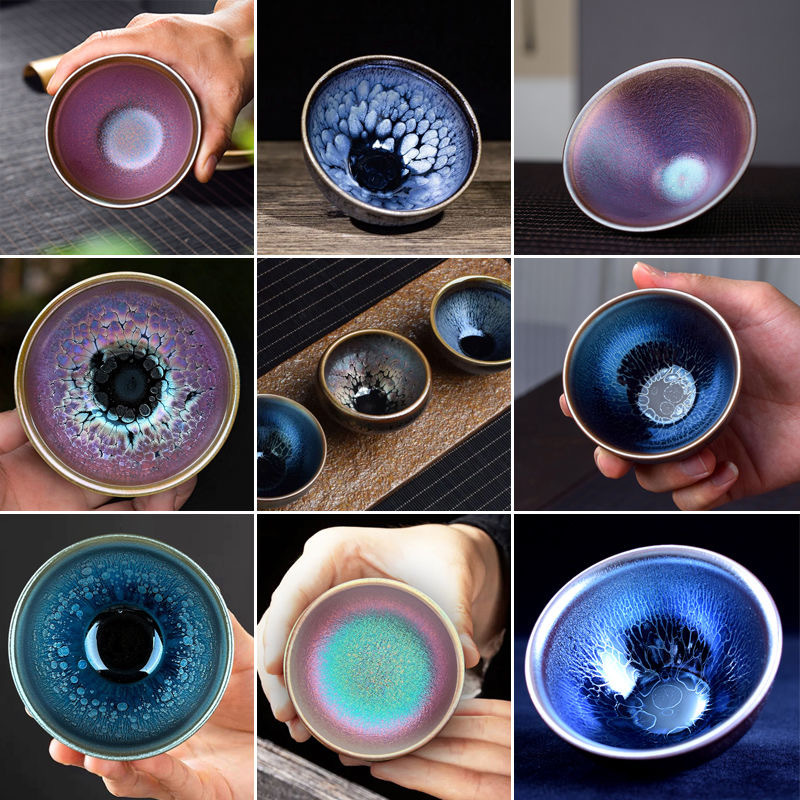
Converging Mouth敛口盏
The rim curves gently inward, as if the cup is holding a secret. This shape conserves heat — an essential quality for slow, contemplative tea sessions where the last sip should be as warm as the first. The narrow opening concentrates the aroma inside the bowl, releasing it in a focused stream when you lift the cup. Visually restrained, the Renkou rewards close observation: the interior glaze world reveals itself only to the drinker, not to the room. Ideal for single-origin oolongs and aged teas that benefit from prolonged warmth.
Explore Converging Mouth pieces →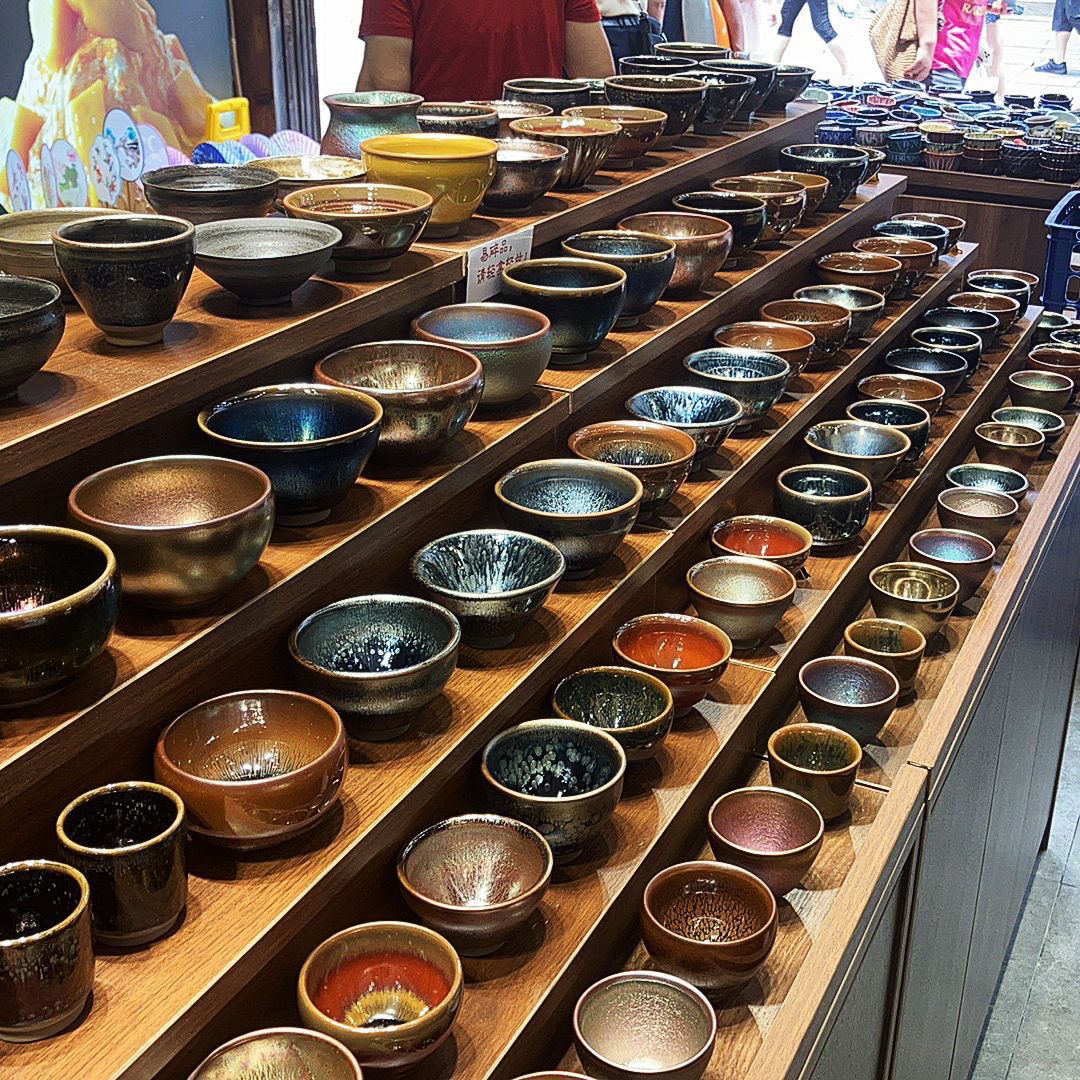
Open Mouth敞口盏
The rim flares outward, unconditionally open — a cup that hides nothing. The wide opening allows the tea to cool rapidly, making it the preferred shape for delicate green teas and white teas that would be scalded by excessive heat retention. The expansive interior also provides the largest canvas for glaze appreciation: oil spots, hare's fur streaks, and crystalline blooms are displayed without obstruction. A generous, welcoming shape — the extrovert of the Jian Zhan family.
Explore Open Mouth pieces →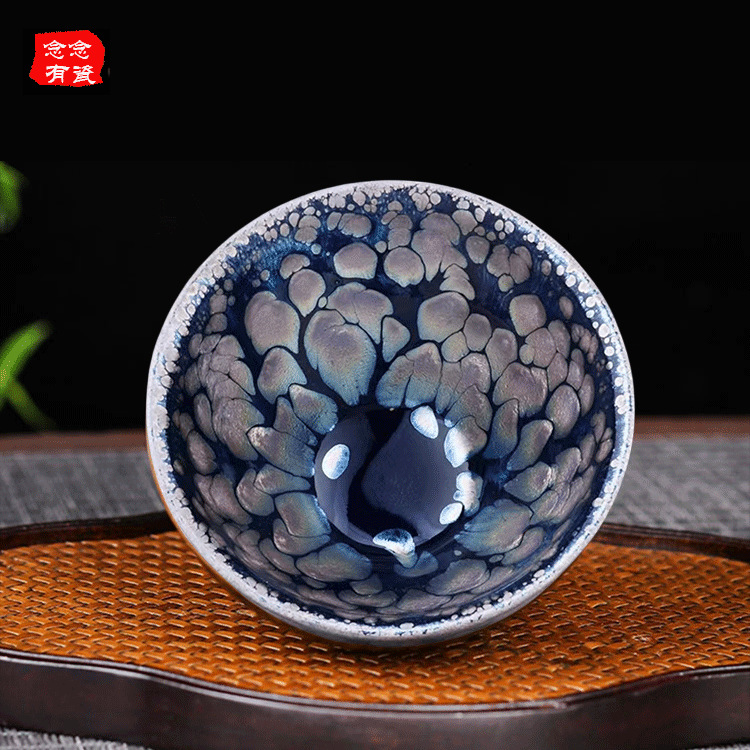
Bamboo Hat斗笠盏
Named for its resemblance to the conical hat worn by farmers and fishermen across East Asia, the Douli is defined by its dramatically flared walls — wide at the rim, narrow at the base, with a decisive angle. This geometry does two things brilliantly: it cools tea faster than any other shape (maximum surface area), and it makes the interior glaze pattern visible from across the table. A statement shape, often chosen by collectors for its sculptural presence. Pairs especially well with green teas and lightly oxidized oolongs.
Explore Bamboo Hat pieces →
Zen Meditation禅定杯
Low, wide, and grounded — the Zen Meditation cup sits close to the table like a monk in zazen. The shallow, bowl-like profile minimizes the distance between the tea surface and the rim, allowing the full aroma to rise unimpeded. This shape was designed for the slow, deliberate tea ceremonies of Buddhist monasteries, where each movement — lifting, tilting, sipping — is an act of mindfulness. The wide base provides exceptional stability; it feels rooted, immovable. For drinkers who value presence over volume.
Explore Zen Meditation pieces →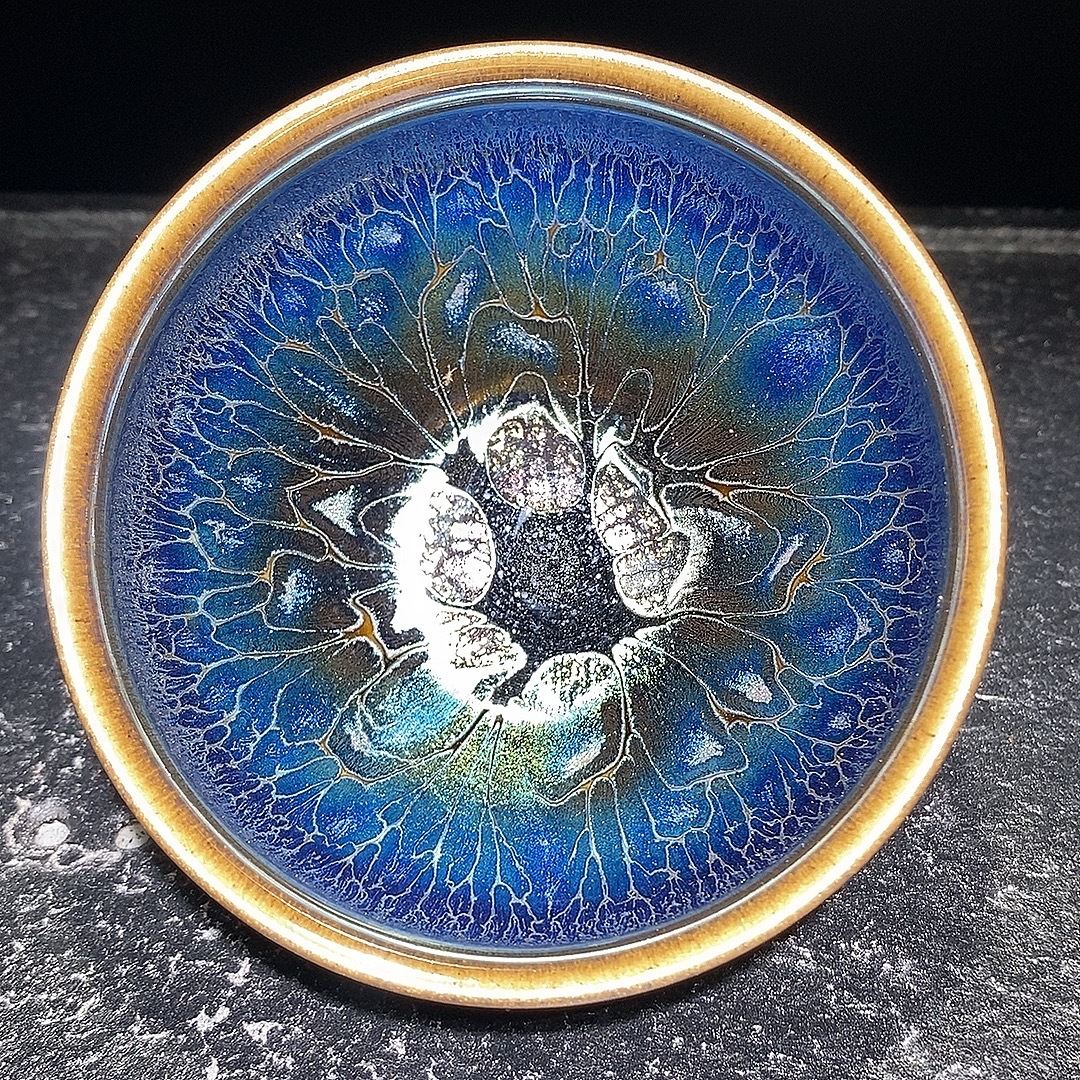
General's Bowl将军杯
Commanding and broad-shouldered, the General's Bowl is the most masculine form in Jian Zhan. The walls rise straight and bold from a wide foot, then turn gently at the rim — a profile that fills the entire palm. This is a cup for the tea drinker who wants their vessel to have presence: substantial weight, generous capacity, and an uncompromising silhouette. Named for the ceramic vessels that military commanders carried into the field, the shape embodies strength, stability, and the confidence of absolute simplicity. Often chosen for daily use by seasoned collectors who have graduated from smaller, more delicate cups.
Explore General's Bowl pieces →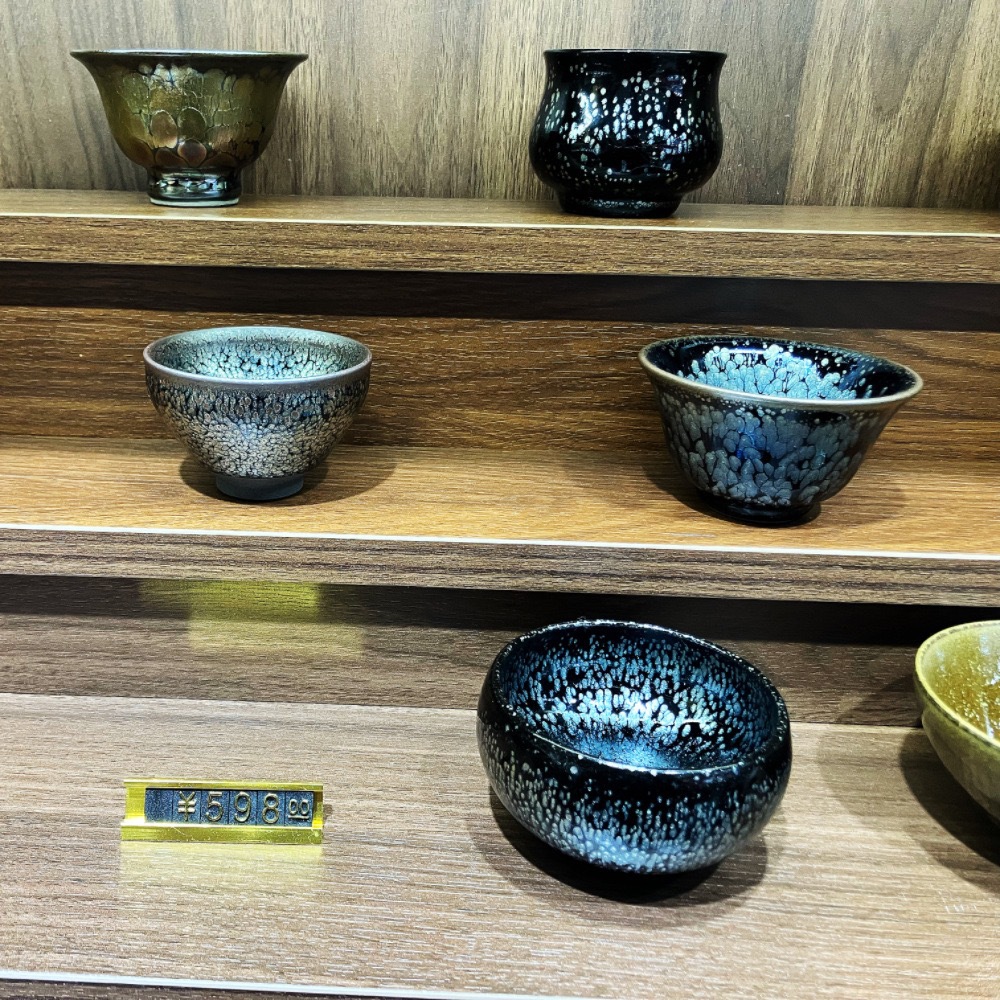
Arhat Cup罗汉杯
Named after the enlightened disciples of Buddha, the Arhat cup features a rounded, full belly that tapers gently at both rim and base — a shape reminiscent of the serene, seated figure of an arhat in meditation. The generous internal volume cradles the tea, while the modest opening conserves heat and aroma. This is the shape of contentment: neither ostentatious nor severe, just perfectly balanced. Many collectors name the Luohan as their favorite daily driver — it is comfortable in the hand, forgiving in use, and suitable for virtually any tea type.
Explore Arhat Cup pieces →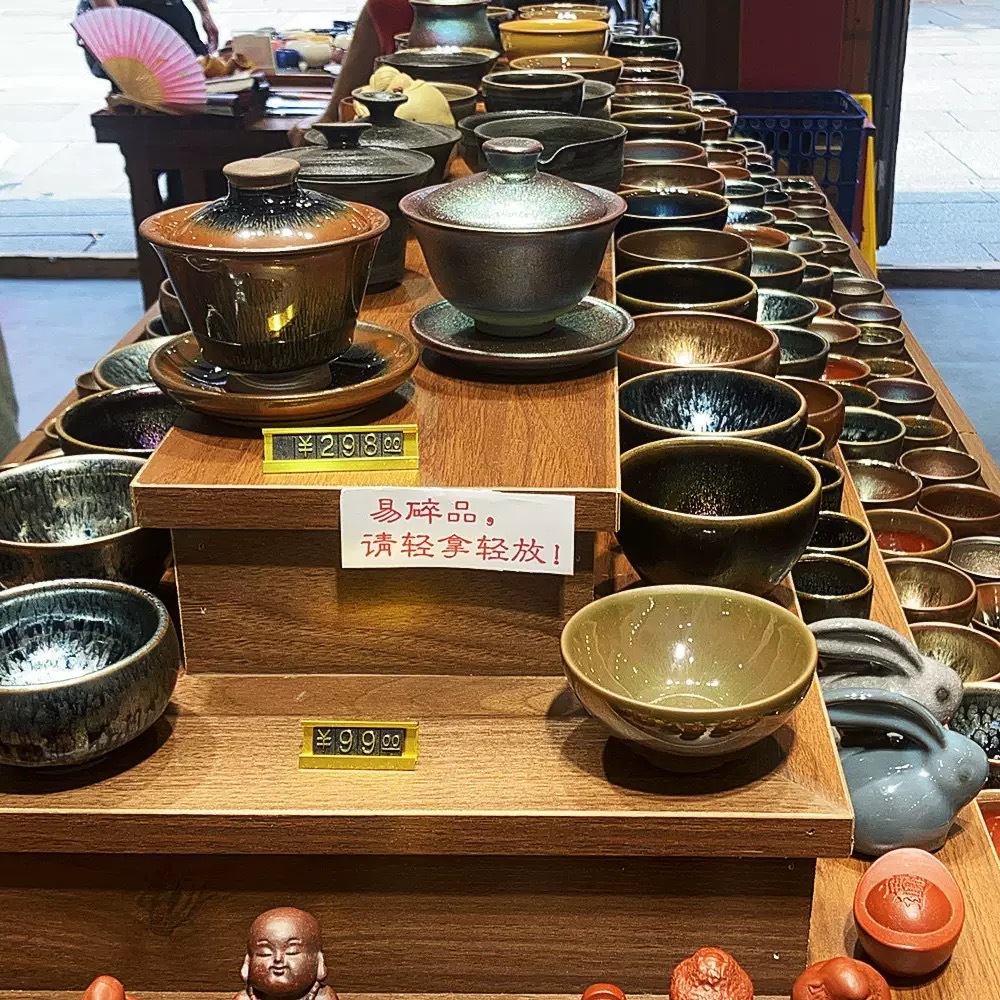
Flower Mouth花口盏
The rim is not a continuous circle but a lobed, petal-like contour — typically five or six lobes that echo the geometry of plum blossoms or lotus petals. This decorative edge transforms the cup from a functional vessel into a sculptural object. Historically, the flower mouth was reserved for formal occasions and gift-giving: the five-lobed form referenced the five blessings (longevity, wealth, health, virtue, natural death), making it an auspicious choice for weddings and celebrations. A subtle flourish that rewards attention — from most angles it reads as a classic cup, but from directly above, the bloom reveals itself.
Explore Flower Mouth pieces →